
1979 Dollar Reality Check: Facts vs. Market Expectations
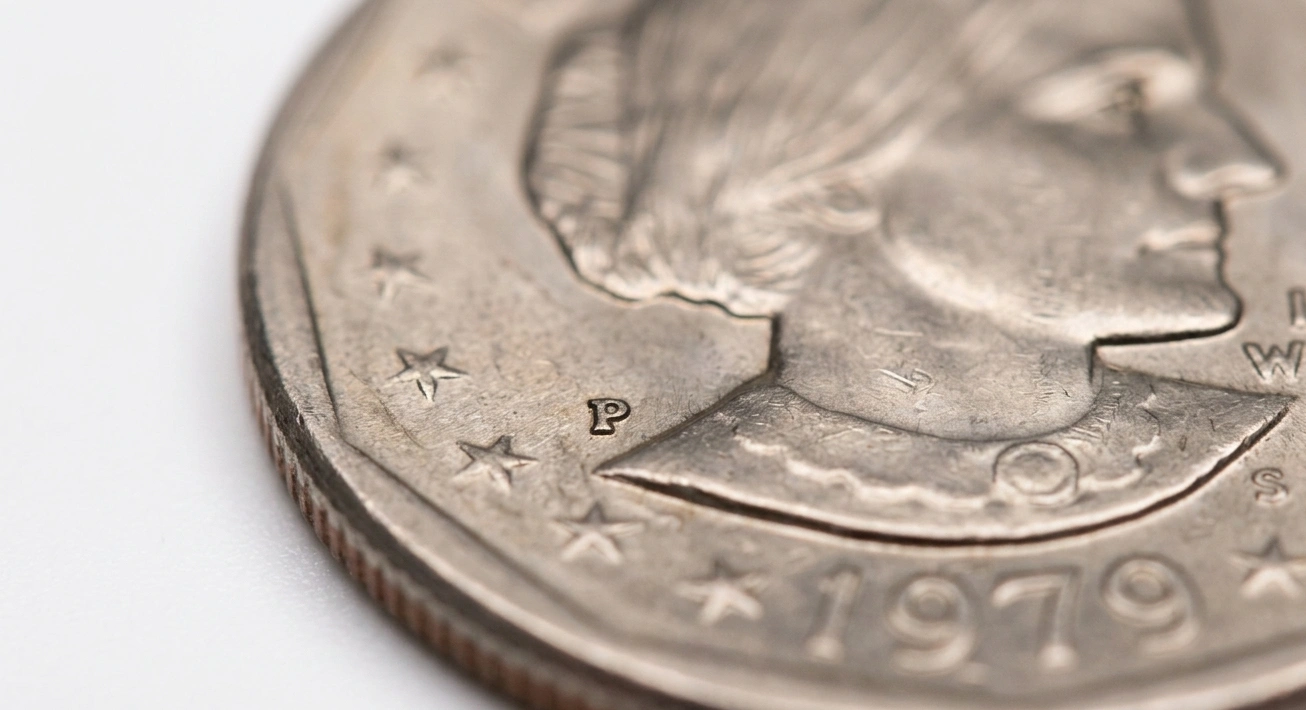
Metal content within a 1979 silver dollar often dictates one price, while live auction bidding creates a completely different reality.
Mistakenly labeling the Susan B. Anthony dollar as a "silver coin" remains the most common error in US numismatics.
Build Component | Mass and Content |
Item Weight | 8.1 grams |
Internal Core | Pure Copper |
Outer Layer (Cladding) | Copper mixed with Nickel |
Metal Ratio | 75% Copper / 25% Nickel |
Blank Thickness | 2.0 millimeters |
Using copper instead of silver allowed the government to cut production costs to just a few cents per coin.
Raw metal value for an 8.1-gram coin sits below $0.06 based on April 2026 market rates.
Name vs Reality: The Silver Myth
"Silver Dollar" is a term used for this coin only out of habit.
Official records at the Mint name it the "Susan B. Anthony Dollar Coin."
Why confusion persists:
Metal color mimics the shine of 900-grade silver → visual trickery.
Large size of past dollar coins was linked to precious metals → mental error.
Marketing tactics by private companies in the 1980s → misinformation.
Actual silver content across all 1979 circulation runs is exactly 0.0 grams.
Wide Rim Anomalies: The Primary Price Driver
Market value spikes sharply when a specific design shift is spotted, but you can determine it with the coin checker app.
Wide Rim variants appeared after an attempt to improve the coin's look by expanding the border.
Price trends for Wide Rim (Philadelphia): 2024 → MS65 average was $78.
2026 → MS65 average hit $85.
Yearly growth in this niche → 4.5%.
Stamp Specs Comparison:
Narrow Rim (Type 1) → Gap from date to edge: 1.1 mm.
Wide Rim (Type 2) → Gap from date to edge: 0.5 mm.
Closing the space between the digits and the border → sign of a rare strike → 3500% price jump over face value.
Auction Records and 2025-2026 Stats
Trading results on major platforms show real interest in perfect specimens.
Ignoring the lack of silver, investors pay for flawless preservation.
Mint and Grade | Latest Sale Price | Date Recorded |
1979-P Wide Rim MS67+ | $1,350 | January 2026 |
1979-S Proof Clear S PR70 | $480 | March 2026 |
1979-D MS67 (Standard) | $210 | December 2025 |
1979-P Narrow Rim MS68 | $1,150 | February 2026 |
Professional grading certificates are mandatory for hitting these price points.
Without a plastic slab, the coin is viewed as a regular $1 spending piece.
1979 Production Errors
Markets value factory mistakes higher than perfect standard coins.
1979 strike errors turn a copper-nickel disc into a high-value asset.
Confirmed high-value defects:
Struck on a 25-cent blank → Weight 5.67 grams → $500 price.
Missing blank fragment (Clipped Planchet) → Incomplete circle → $120 price.
25% Off-center strike → Visible empty area → $400 price.
Stuck in the press (Capped Die) → Distorted image → $750 price.
Weight is the main indicator when hunting for errors.
Any shift from the 8.1-gram standard needs an immediate expert check.
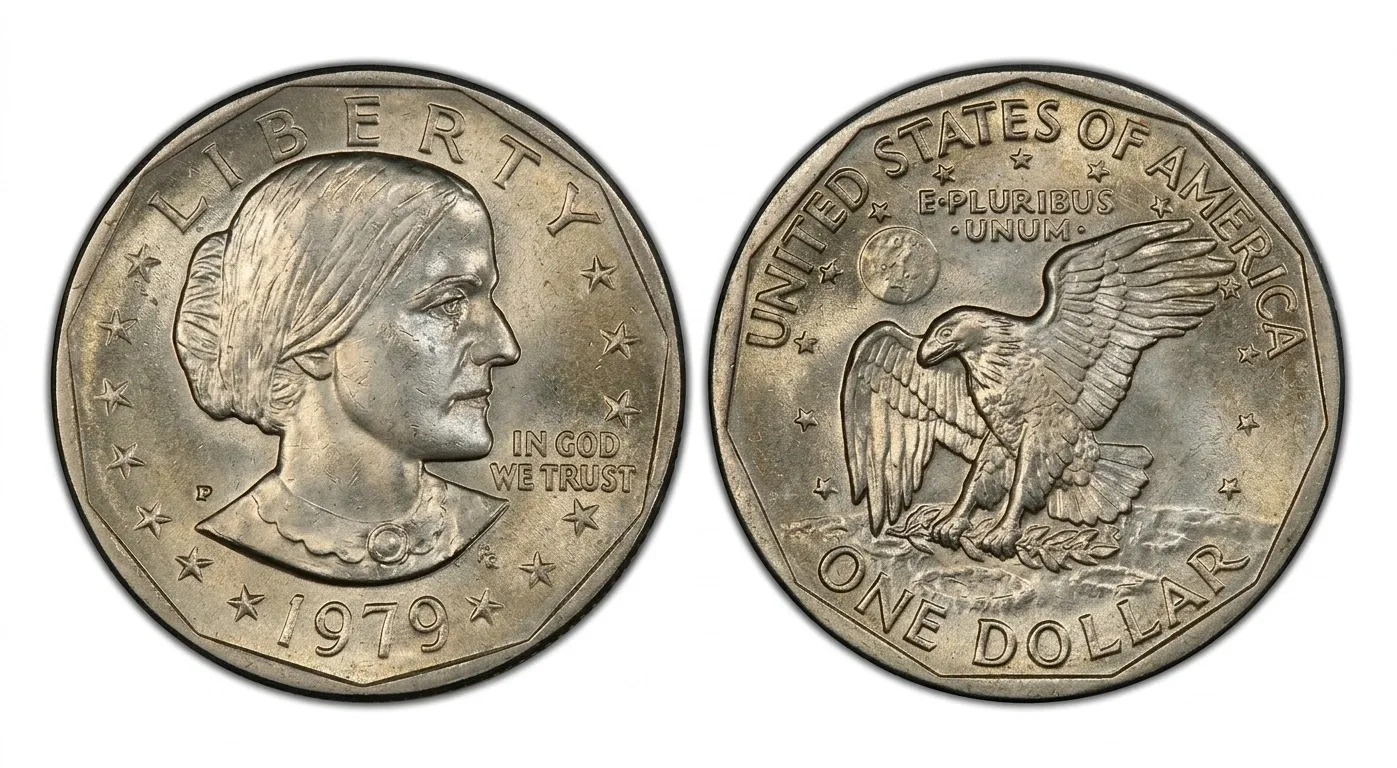
Mint Mark Impact on Resale
Letters on the front side decide the rarity of a specific run.
San Francisco (S) marks had two technical styles in 1979.
Style differences:
S Type 1 → Inside loops of the letter are filled with metal → common.
S Type 2 → Inside loops are clear and easy to see → rare.
Demand Ratio: Type 2 is 6 times more popular than Type 1.
Replacing worn stamps with new ones at the end of the production cycle caused this split.
Long-Term Storage Risks
Copper within the coin reacts to oxygen over time.
Corrosion spots drop the collector grade by several levels.
Steps to protect market value:
Use acid-free plastic holders.
Keep room humidity below 40%.
Avoid touching the coin surfaces with bare hands.
Finger oils → chemical reaction with nickel → permanent dark marks.
Losing the original factory shine cuts the coin's price by 70-90%.
Survival Stats for Flawless Units
Most of the 757 million coins entered active circulation.
Condition spread:
Worn (Circulated) → 98.5%.
Unworn (Uncirculated) → 1.4%.
Top Tier (Gem BU) → 0.1%.
Chances of finding an MS67 grade coin in a 1979 bank bag are tiny.
This scarcity creates the $600+ price tag, not the metal itself.
Grading Economics
Sending an 8.1-gram coin for grading must be a logical choice.
Fees and shipping costs average around $40 per unit.
When to grade:
Clear Wide Rim markers found on the front.
Zero scratches on the Susan B. Anthony portrait.
Original matte shine remains on the deep parts of the image.
Dull-looking coins will cost more to grade than they are worth in a sale.
Comparison with Eisenhower Dollars
Previous dollar series used 40% silver in collector versions.
Switching to 1979 with zero silver options frustrated many investors back then.
Quick Comparison:
1976 Dollar (Collector) → Contains 9.6 grams of pure Silver.
1979 Dollar (Collector) → Contains 0.0 grams of pure Silver.
This gap explains why 1979 coins were ignored for 40 years.
Technical varieties only became price drivers in recent decades.
Spotting Fake Wide Rims
High prices for rare types lead to fakes made by carving.
Scammers try to widen the border on common coins manually.
How to check:
Look at the date digits under 40x zoom.
Use the app to scan coins for value if the factory shine is broken near the rim.
Verify the 8.1-gram weight on a digital scale.
Tool marks near the edge prove the coin is a fake.
Fake Wide Rims are worth only their face value of $1.